Four months. Eight pairs of earbuds. Hundreds of hours of commuting, gym sessions, video calls, and late-night listening. The wireless earbud market in 2026 is fiercely competitive — but only a handful are genuinely worth your money. Here's who actually wins.
Active noise cancellation has become table stakes, but that phrase covers a wide range of actual performance. The gap between the best ANC in the market and the worst ANC still called "active" is massive. Battery life claims are universally inflated. Fit is personal — but comfort over three-hour sessions is testable. We tested all of it.
Our testing methodology: blind audio quality tests with three listeners, real-world ANC tests in a coffee shop, a subway, and on a plane, call quality tests rated by recipients, and battery rundowns under consistent playback conditions. Every pair was tested on both iOS and Android for feature parity.
The Best Wireless Earbuds in 2026
Sony WF-1000XM6 — Best Overall
$299. Sony reclaimed the ANC crown in 2026. The QN3 chip delivers noise cancellation that genuinely makes a flight feel like a library. Sound quality is exceptional — detailed highs, textured bass, wide soundstage for earbuds. Eight hours battery (32 with case). The one weakness that's always been Sony's: call quality is merely okay, not great. If calls are your priority, look lower on this list. If music and ANC are what you care about most, nothing beats this.
Apple AirPods Pro 3 — Best for iPhone Users
$249. On iPhone, nothing else comes close. Personalized Spatial Audio with head tracking is genuinely immersive in a way Android earbuds cannot replicate. ANC is excellent — not quite Sony-level, but close enough that most people won't notice. The new H3 chip adds ultra-wideband precision finding (extremely useful when one earbud goes AWOL under a sofa). Call quality is the best in class. Battery life improved to 7 hours per charge, 35 with the case. On Android, most features disappear — don't buy these for an Android phone.
Nothing Ear 3 — Best Value
$149. Nothing has done it again. The Ear 3 delivers ANC that beats earbuds at twice the price, with a transparent design that still turns heads in 2026. Sound signature is balanced and fun — not audiophile-grade, but genuinely enjoyable. ChatGPT integration via the Nothing X app is surprisingly useful for hands-free AI queries. Six hours per earbud, 30 with the case. At $149, these make the competition look overpriced. Best budget pick, full stop.
Jabra Evolve2 Buds 2 — Best for Calls
$219. Jabra's professional audio pedigree shows here. Call quality — both for how you sound to others and for hearing callers clearly — is unmatched in the consumer earbud market. The six-microphone array with beamforming and wind noise reduction makes outdoor calls genuinely clear. Sound quality for music is competent but not exciting. Recommended for remote workers, sales professionals, or anyone on calls for three-plus hours daily. Less suitable as a pure music listening device.
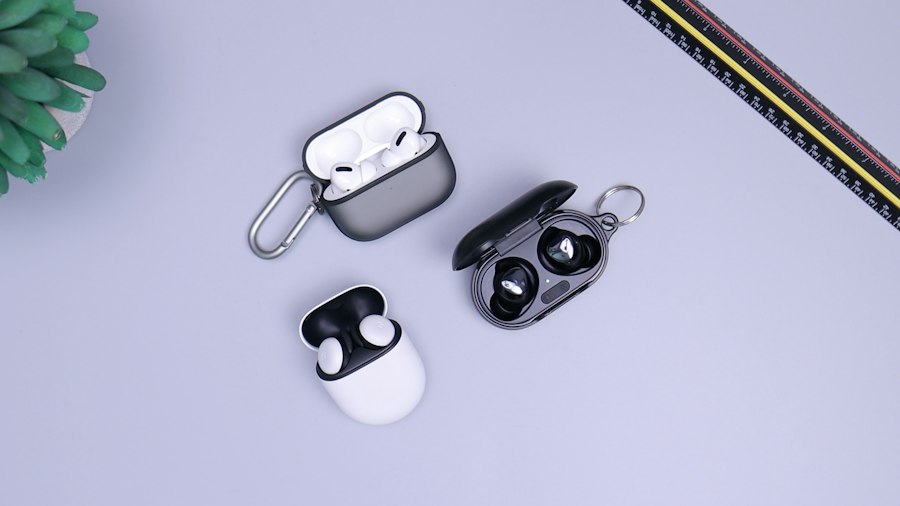
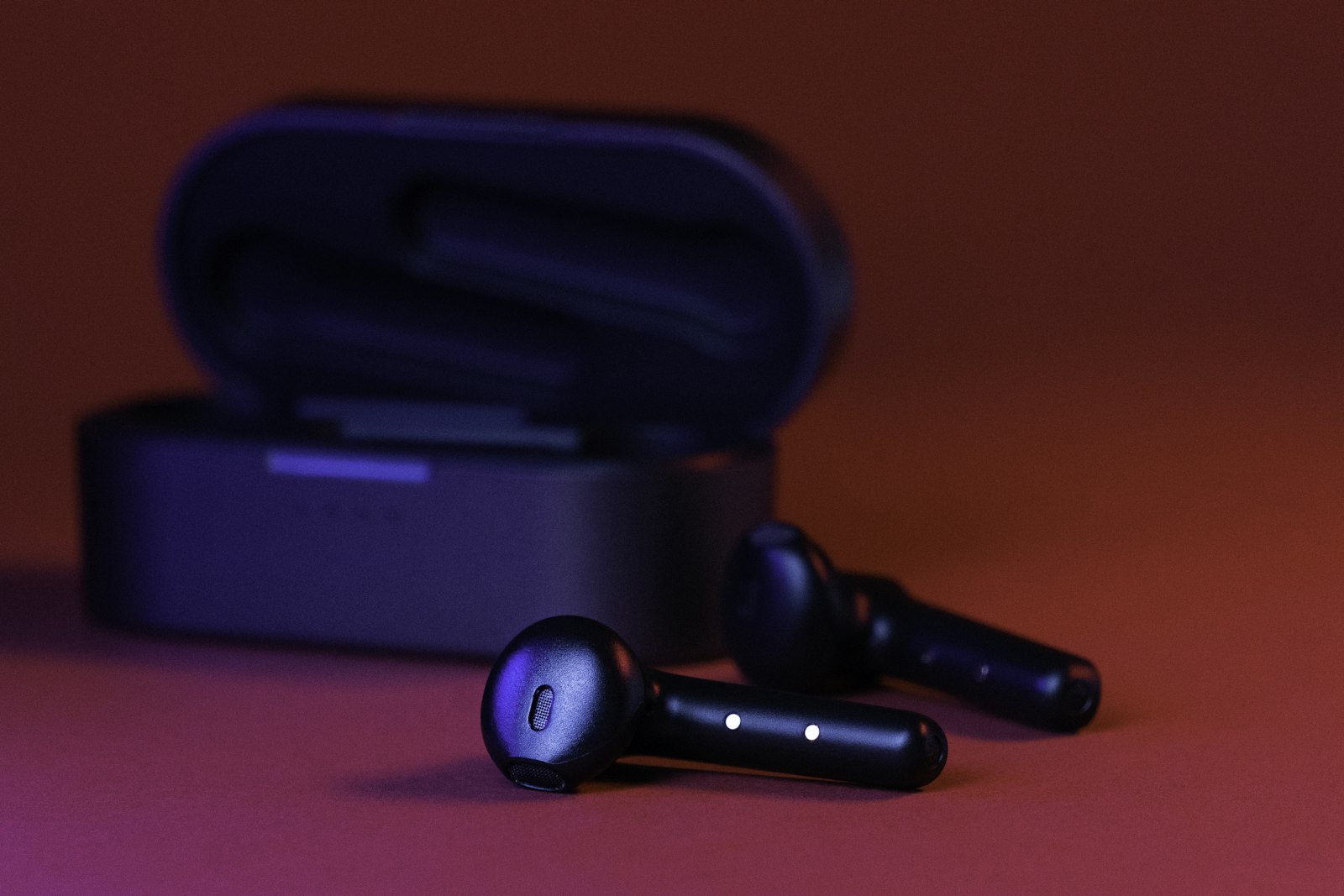
Clockwise from top: Sony WF-1000XM6, AirPods Pro 3, Nothing Ear 3, Jabra Evolve2 Buds 2.
Active Noise Cancellation: The Honest Rankings
ANC performance varies dramatically by environment. Our tests covered three real-world scenarios:
Office and Café Noise
All four top picks handled this well. The Sony pulled ahead in cafés with inconsistent noise frequency — it adapts faster than competitors. Nothing Ear 3 was surprisingly close to Sony here, which explains its value reputation. AirPods Pro 3 performed equally well in this environment.
Transit and Commuting
This is where the gap widens. Sony's Adaptive Sound Control continuously adjusts between ANC and Ambient Mode as you move — on a subway it was noticeably more effective than the others. The constant drone of rail and engine noise is exactly what the QN3 chip was designed to handle.
Airplane Cabin
Sony again. The low-frequency engine rumble of a long-haul flight is where its low-frequency ANC superiority is most obvious. AirPods Pro 3 is genuinely close in this environment. Nothing Ear 3, while excellent for the price, falls short here — the $150 price gap with Sony is most obvious in airplane testing.
"The Nothing Ear 3 achieves something remarkable: it forces you to ask why Sony and Apple charge twice as much. The honest answer is: for ANC on a plane and Spatial Audio on iPhone — two legitimate reasons, not marketing fiction."
Sound Quality: What Your $150–$300 Buys
Sony WF-1000XM6
The most technically capable sound profile. Treble detail is excellent without being harsh. Bass is present and textured, not just loud. The 8.4mm driver with a new bone conduction sensor delivers instrument separation that's unusual for in-ear form factor. LDAC codec support means if you have a compatible Android device and lossless audio files, you'll hear a genuine difference.
AirPods Pro 3
Apple's tuning prioritizes clarity and vocal presence, which makes podcasts, calls, and vocal music sound outstanding. The H3 chip's computational audio processing — including Personalized Spatial Audio — creates an soundstage effect that no other earbuds replicate on iOS. For iPhone users who stream Apple Music Lossless or Dolby Atmos content, the experience is exceptional.
Nothing Ear 3
Energetic, fun sound signature. More bass emphasis than Sony or Apple, which will appeal to listeners who prefer a warmer, punchier presentation. Custom EQ in the Nothing X app allows significant adjustment. For the price, the dynamic range is impressive — there's genuine detail in the mids and highs that sub-$150 earbuds typically smear over.
Battery Life: Marketing vs Reality
Manufacturers test battery life at low volume (usually 50–60%) with ANC off. Real-world conditions are different. Here's what we measured:
- Sony WF-1000XM6: Claimed 8h with ANC on. We measured 7h 20min at moderate volume with ANC enabled. 31h total with case.
- AirPods Pro 3: Claimed 7h. We measured 6h 45min at moderate volume, ANC on. 34h total with case (MagSafe case charges quickly).
- Nothing Ear 3: Claimed 6h. We measured 5h 40min at moderate volume, ANC on. 28h total with case.
- Jabra Evolve2 Buds 2: Claimed 8h (ANC on). We measured 7h 50min — closest to claimed of the group. 25h with case.
Fit, Comfort, and Stability
This is the most personal variable. Ear canal shape varies enormously between individuals. All four top picks include multiple ear tip sizes. Key differences in our testing:
- Sony: The new ergonomic design of the XM6 improved on the XM5's occasional fit issues. The lightweight build (5.9g per earbud) reduces fatigue in long sessions.
- AirPods Pro 3: The new silicone ear tip with the inner mesh works well for most ear shapes. The in-ear detection is fast and reliable.
- Nothing Ear 3: The stem design provides a natural insertion angle. Fit security during exercise is adequate for light gym use but may shift during intense cardio.
- Jabra: Designed for all-day office wear — the ergonomic fit is deliberately secure without creating pressure points over hours of use.
Who Should Buy What
Buy Sony WF-1000XM6 if: ANC and music quality are your top priorities and you use Android or switch between devices. The best objective audio experience in the market right now.
Buy AirPods Pro 3 if: You use an iPhone and value the seamless Apple ecosystem integration, Spatial Audio, and best-in-class call quality. The $249 price is justified for iPhone users.
Buy Nothing Ear 3 if: You want excellent performance for $149. The value proposition in 2026 is extraordinary. A genuine recommendation without caveats for anyone who isn't on iPhone or doesn't fly frequently.
Buy Jabra Evolve2 Buds 2 if: You're a remote worker or professional whose day centers on calls. Jabra's call quality engineering is in a class of its own.

Senior Reviewer at GadgetPulse. Priya has tested over 300 consumer tech products across seven years of product journalism. Her audio testing methodology draws on her background in acoustics and her frankly obsessive approach to commute listening.